
AMD Radeon HD 6990 Review: A Loud, Hot, Power-Hungry Champion
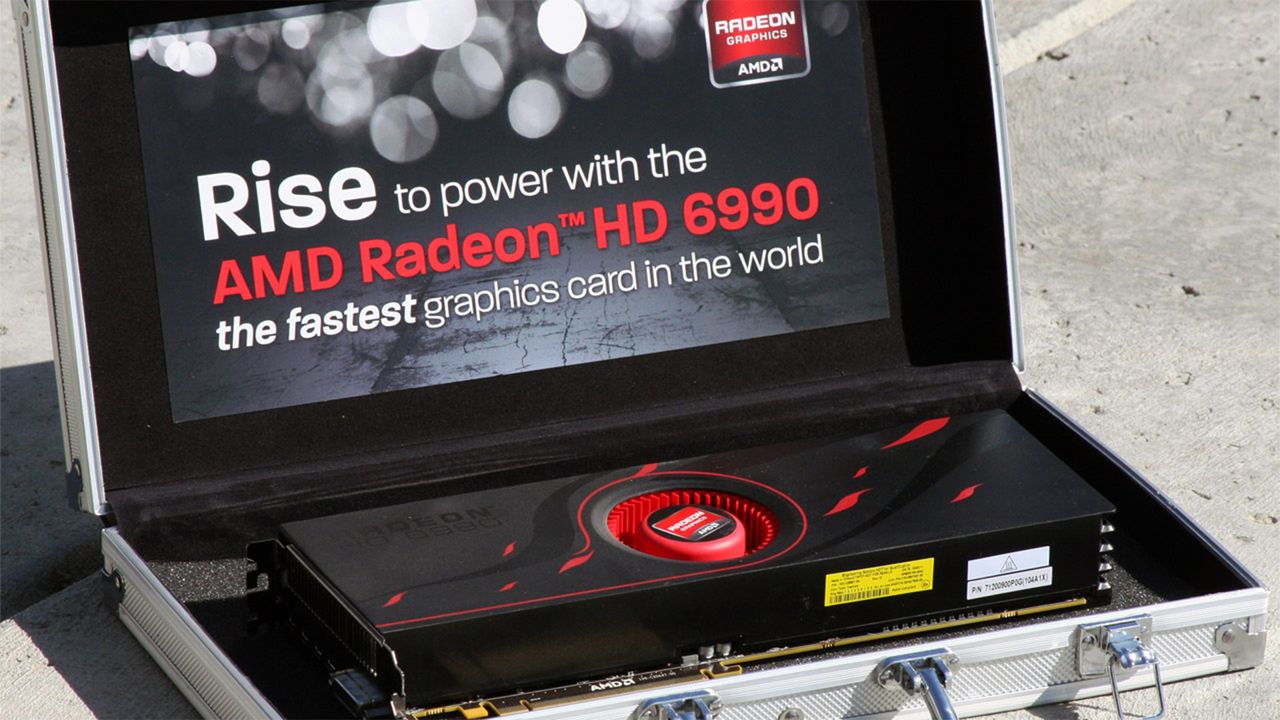
Quick Verdict 15 years ago, AMD's Radeon HD 6990 stormed onto the scene as the undisputed speed king of graphics cards. A marvel of its era, this dual-GPU beast delivered unparalleled performance, reigning as the
Quick Verdict
15 years ago, AMD's Radeon HD 6990 stormed onto the scene as the undisputed speed king of graphics cards. A marvel of its era, this dual-GPU beast delivered unparalleled performance, reigning as the fastest single card available. However, that crown came at a significant cost: extreme heat, deafening noise, and insatiable power consumption. While a technical triumph in raw speed, it was a practical challenge for many users, pushing the boundaries of what consumers might tolerate for top-tier gaming.
The Titan of Antilles: A Look Back at the Radeon HD 6990
Launched in March 2011, several months later than initially anticipated, the AMD Radeon HD 6990, codenamed Antilles, was a testament to AMD's engineering ambition. This flagship graphics card wasn't just powerful; it was the most powerful, snatching the title of the world's fastest graphics card at its debut. This was a title AMD was familiar with, having previously held it with the Radeon HD 5970. The 6990 represented the pinnacle of PC graphics performance for its time, designed to push the limits and dominate gaming benchmarks.
Yet, achieving such a performance milestone required AMD to push its silicon to the absolute limit. Contemporary reviews didn't shy away from highlighting the significant trade-offs that came with this raw power: considerable heat, excessive noise, and staggering power consumption. It was a card that demanded respect for its performance, but also patience for its temperament.
Key Specifications and Raw Power
The Radeon HD 6990 was an absolute monster under the hood. It housed two Cayman XT 40nm GPUs, combining for a formidable 3072 stream processors and an astounding 5.28 billion transistors. These figures, gargantuan for 2011, powered its market-leading performance. The standard GPU clock operated at 830 MHz, with an overclocking option pushing it up to 880 MHz via an innovative dual BIOS switch – a feature that allowed enthusiasts to unlock even more power, albeit with increased thermal and power demands.
Memory-wise, the card featured 4GB of GDDR5 VRAM, distributed as 2GB per GPU, which was a majestic amount for the era, ensuring games could run with high-resolution textures. Connectivity was robust, supporting up to five displays, a boon for multi-monitor setups. Physically, it was a substantial piece of hardware: a dual-slot, 12-inch PCB that required two 8-pin power connectors. And for all this power, the thermal design power (TDP) was a massive 375 W, with the OC modes further escalating consumption, reportedly pushing up to 450W.
At launch, this flagship device commanded a premium price of $699, positioning it firmly at the top end of the market for serious enthusiasts.
Performance and User Experience: A Roaring Success with Caveats
In terms of raw frame rates, the Radeon HD 6990 was unmatched. Our test suites at the time, featuring popular DirectX 11 titles like F1, Battlefield, and Metro franchises, saw the 6990 consistently deliver top-tier results. For gamers seeking the absolute best performance, especially across multiple displays, the 6990 delivered. It was capable of running these demanding titles at resolutions and detail settings that few other cards could manage with similar fluidity. For those still playing these classic titles today, it's fascinating to compare the performance of this former champion with modern GPUs, or even integrated graphics, to appreciate the generational leaps in power.
However, the user experience was significantly impacted by the card's operating characteristics. As hinted, and explicitly detailed in tests, the Radeon HD 6990 generated considerable heat. This, in turn, necessitated aggressive cooling, leading to substantial noise output. Tom's Hardware's own noise test, conducted by Editor Emeritus Chris Angelini, demonstrated just how loud this card could get under load – a significant point of concern for anyone valuing a quiet computing environment. Paired with its gargantuan power consumption, the 6990 was a component that demanded a robust power supply and excellent case airflow to operate effectively, and quietly, if such a thing was even possible for this card.
Pros and Cons
Pros:
- World's Fastest (at launch): Unparalleled gaming performance for its time.
- High VRAM: 4GB GDDR5 (2GB per GPU) was very generous and future-proof for 2011.
- Five-Display Support: Excellent for multi-monitor setups.
- Dual BIOS Switch: Offered flexibility for overclocking enthusiasts to push performance further.
Cons:
- Extreme Heat: Required significant cooling solutions within the PC case.
- Excessive Noise: A notoriously loud card under load, detracting from the gaming experience.
- High Power Consumption: A massive 375W TDP, rising to 450W in OC modes, demanding a powerful and efficient PSU.
- Late Launch: Arrived several months behind schedule.
- Physical Size: Its 12-inch PCB was large, potentially limiting compatibility with smaller cases.
- Premium Price: A flagship $699 price tag made it an elite-only purchase.
Alternatives and Competition
AMD's own product stack provided a compelling alternative to the single-card Radeon HD 6990. A pair of Radeon HD 6970s in a CrossFire configuration was considered a strong option. Our analysis suggested that two 6970s sacrificed nothing in terms of performance compared to the 6990, the only real drawback being the need for more physical space within the PC case to accommodate two separate cards. This offered a potentially more flexible, and perhaps quieter, path to similar performance.
Just a couple of weeks after the 6990's debut, Nvidia launched its dual-GPU counter-punch, the GeForce GTX 590. While Nvidia's offering was noted for being noticeably quieter, it ultimately couldn't quite surpass the Radeon HD 6990 in raw performance, allowing AMD to retain its speed crown, albeit by a narrow margin and with significant noise and thermal penalties.
Here's a quick comparison:
| Feature | AMD Radeon HD 6990 | Dual AMD Radeon HD 6970s (CrossFire) | Nvidia GeForce GTX 590 |
|---|---|---|---|
| Performance | World's Fastest (at launch) | Comparable to HD 6990 | Couldn't quite usurp HD 6990 |
| Noise Level | Very loud | Potentially quieter (two separate cards) | Noticeably quieter |
| Power Draw | Massive (375W / 450W OC) | High (two cards) | High (dual GPU) |
| Space Required | Single dual-slot 12-inch card | More space (two cards) | Single dual-slot card |
| Cost (Launch) | $699 | (Implied higher than single 6970) | (Similar flagship pricing) |
Buying Recommendation
Today, 15 years after its launch, the AMD Radeon HD 6990 is far from a practical choice for a modern gaming PC. Its performance is vastly outstripped by even mid-range integrated graphics solutions, let alone current discrete GPUs. Its power consumption, heat output, and noise levels are also entirely out of step with contemporary expectations.
Do not buy the Radeon HD 6990 for current gaming or productivity tasks. Its relevance today is purely historical. For collectors, PC history enthusiasts, or those looking to build a period-accurate gaming rig from the early 2010s, it represents a significant piece of graphics card history – a true testament to pushing boundaries, for better or worse. For anyone else, look to literally any modern GPU for a superior, quieter, cooler, and far more power-efficient experience.
FAQ
Q: Was the Radeon HD 6990 a good value at launch?
A: At $699, it was a premium product. While it offered the absolute best performance available, the significant trade-offs in heat, noise, and power consumption meant its value was primarily for enthusiasts who prioritized raw speed above all else and were willing to contend with its drawbacks.
Q: How does the Radeon HD 6990 compare to a modern GPU?
A: A modern GPU, even a relatively inexpensive one, would significantly outperform the Radeon HD 6990 in every measurable way, including frame rates, power efficiency, heat generation, and noise levels. It's a testament to how far technology has advanced in 15 years.
Q: What was the main innovation of the HD 6990?
A: Beyond its dual-GPU design for top-tier performance, a key innovation was the dual BIOS switch, which allowed users to easily toggle between a standard clock profile and an overclocked profile, effectively pushing the TDP even higher for maximum performance at the cost of even greater heat and power consumption.
Related articles
Android 17 QPR2 Beta 7.1: The Performance Relief You've Been Waiting
Android 17 QPR2 Beta 7.1: Finally Fixing the QPR1 Performance Woes Verdict: Android 17 QPR2 Beta 7.1 is a crucial and highly anticipated software update for Google Pixel users, specifically targeting and resolving the

DJI Solo Video Setups: Smart Choices for Lone Creators
This review delves into DJI's recommended solo video setups, highlighting the Osmo Pocket 3 Creator Combo as a top pick for its integrated camera, gimbal, and mic. It also covers stabilizers like the Osmo Mobile 8 and RS 4, and the DJI Mic Mini series for enhanced audio, providing honest pros, cons, and clear buying advice.

Ars Technica's Rocket Report: Your Essential Space Industry Briefing
Quick Verdict Ars Technica's Rocket Report, presented by veteran space reporter Stephen Clark, offers an invaluable and meticulously organized weekly (or similar frequency, implied by "Edition 9.15") digest of the most

Apple iPhone Duo: A Daring Debut with Notable Compromises
Apple's highly anticipated iPhone Duo, priced at $2,000, has gone on pre-order. While hailed as "Apple's most exciting device in a decade" for its innovative foldable design and immersive display, it comes with significant drawbacks like the absence of FaceID and a premium camera.
KDE Plasma 6.8: A Future-Focused 30th Anniversary Update
Quick Verdict KDE Plasma 6.8, arriving as the "30th Anniversary Edition," is a pivotal release that decisively pushes the desktop environment into the future. With a definitive farewell to native X11 sessions and a

Ephemeral PR Preview Environments on GKE: A Deep Dive
Every development team eventually grapples with the limitations of shared staging environments. The familiar scenario: multiple features deployed simultaneously, database migrations clashing, and the phrase "it works on