
Amazon Rejects FT Report Linking AI Coding Tools to AWS Outages
Amazon pushes back on Financial Times report blaming AI coding tools for AWS outages Amazon's cloud computing arm, Amazon Web Services (AWS), has issued a forceful public rebuttal to a Financial Times (FT) report

Amazon pushes back on Financial Times report blaming AI coding tools for AWS outages
Amazon's cloud computing arm, Amazon Web Services (AWS), has issued a forceful public rebuttal to a Financial Times (FT) report alleging that the company’s internal AI coding tools were responsible for at least two recent service disruptions. The tech giant dismissed a key claim as "entirely false" and attributed a single, minor December incident to user error rather than AI. This unusual and pointed response highlights the growing scrutiny surrounding the deployment of agentic AI in critical infrastructure.
Key takeaways
- Amazon Web Services (AWS) publicly and strongly denied a Financial Times report blaming its AI coding tools for recent outages.
- AWS stated that the FT's claim of a second outage caused by AI was "entirely false."
- A single, limited disruption in December was acknowledged but attributed to user error in configuring access controls, not a flaw in the Kiro AI tool itself.
- The acknowledged incident affected only AWS Cost Explorer in a single region in mainland China, without impacting core customer-facing services or generating customer inquiries.
- Amazon has implemented new safeguards, including mandatory peer review for production access, to prevent similar occurrences.
What happened
In mid-February, the Financial Times published an article asserting that Amazon’s internal AI coding tools, specifically an agentic assistant named Kiro, had caused at least two AWS outages in recent months. The FT, citing four anonymous sources familiar with the matter, reported a 13-hour interruption to an AWS system in December. According to these sources, engineers had permitted Kiro to make changes, leading the AI tool to decide the optimal action was to "delete and recreate the environment." The report further suggested this was the second such AI-involved disruption.
Amazon Web Services subsequently issued a blog post titled "Correcting the Financial Times report about AWS, Kiro, and AI," directly refuting the core allegations. AWS acknowledged a limited disruption to a single service in one region last December but firmly stated it was due to a misconfigured role—a "user error" that could occur with any development tool, AI-powered or not. Crucially, Amazon declared the FT's claim of a second incident impacting AWS was "entirely false," with an AWS spokesperson clarifying to GeekWire that any such event referenced did not take place within the AWS business.
Why it matters
The public dispute between Amazon and the Financial Times underscores the significant stakes involved in the rapid deployment of agentic AI tools. The FT's narrative, widely circulated, presented a cautionary tale about the potential risks and the complex question of accountability when autonomous AI systems are integrated into critical operational environments. For Amazon, a company that is not only using agentic AI in its own operations but also actively selling these tools to AWS customers, any perception of AI-induced instability in its cloud services is particularly unwelcome.
AWS stands as Amazon's most profitable division, reporting $35.6 billion in revenue and $12.5 billion in operating income last quarter. The cloud unit is a major focus of Amazon's ambitious $200-billion capital spending plan for the year, with a substantial portion earmarked for AI infrastructure. The “unusually pointed” nature of Amazon’s rebuttal, described by New York Times reporter Mike Isaac as "the most prickly" he'd seen in years, reflects the company's determination to control the narrative around AI reliability and user responsibility in its foundational cloud services.
Key details / context
The December disruption acknowledged by Amazon was specifically limited to AWS Cost Explorer, a tool designed to help customers monitor and manage their cloud spending. This incident occurred in one of AWS's 39 geographic regions, located in mainland China. Importantly, Amazon emphasized that the disruption did not impact core AWS services such as compute, storage, or databases, and the company reported receiving no customer inquiries regarding the event. Amazon’s core defense consistently hinged on the distinction between "user error" and "AI error," maintaining that the fault lay in human configuration rather than the Kiro tool's inherent capabilities.
What happens next
Following the acknowledged December incident, Amazon has proactively implemented new safeguards to prevent similar occurrences. These measures include the introduction of mandatory peer review for production access, reinforcing human oversight in critical operational changes. The source content does not provide further details regarding any ongoing investigations or additional future steps beyond these implemented safeguards.
Related articles

Ars Technica's Rocket Report: Your Essential Space Industry Briefing
Quick Verdict Ars Technica's Rocket Report, presented by veteran space reporter Stephen Clark, offers an invaluable and meticulously organized weekly (or similar frequency, implied by "Edition 9.15") digest of the most

AI's Confidence vs. Formal Methods' Rigor: Design Flaws & Verification
While AI accelerates code generation, formal methods remain critical for ensuring system correctness. Languages like TLA+ and tools like Quint enable developers to model and verify system designs before coding, catching subtle flaws. Quint makes formal methods more accessible with developer-friendly syntax and executability. This approach is vital for verifying AI-generated code through trace validation and model-based testing, ensuring reliability against real-world data.

Amazon Prime Video Launches AI-Powered Prime 360 for NBA Coverage
Amazon Prime Video is elevating its NBA coverage with the introduction of Prime 360, an AI-powered replay system offering immersive, 'fly through' views of the action. Kicking off its second season, Prime Video also adds Yahoo fantasy integration and gains exclusive Eastern Conference Finals rights, expanding its tech-driven sports broadcast. The new features aim to deliver a unique and interactive viewing experience for basketball fans.
regional: A two-person Seattle startup lands $1M to reinvent
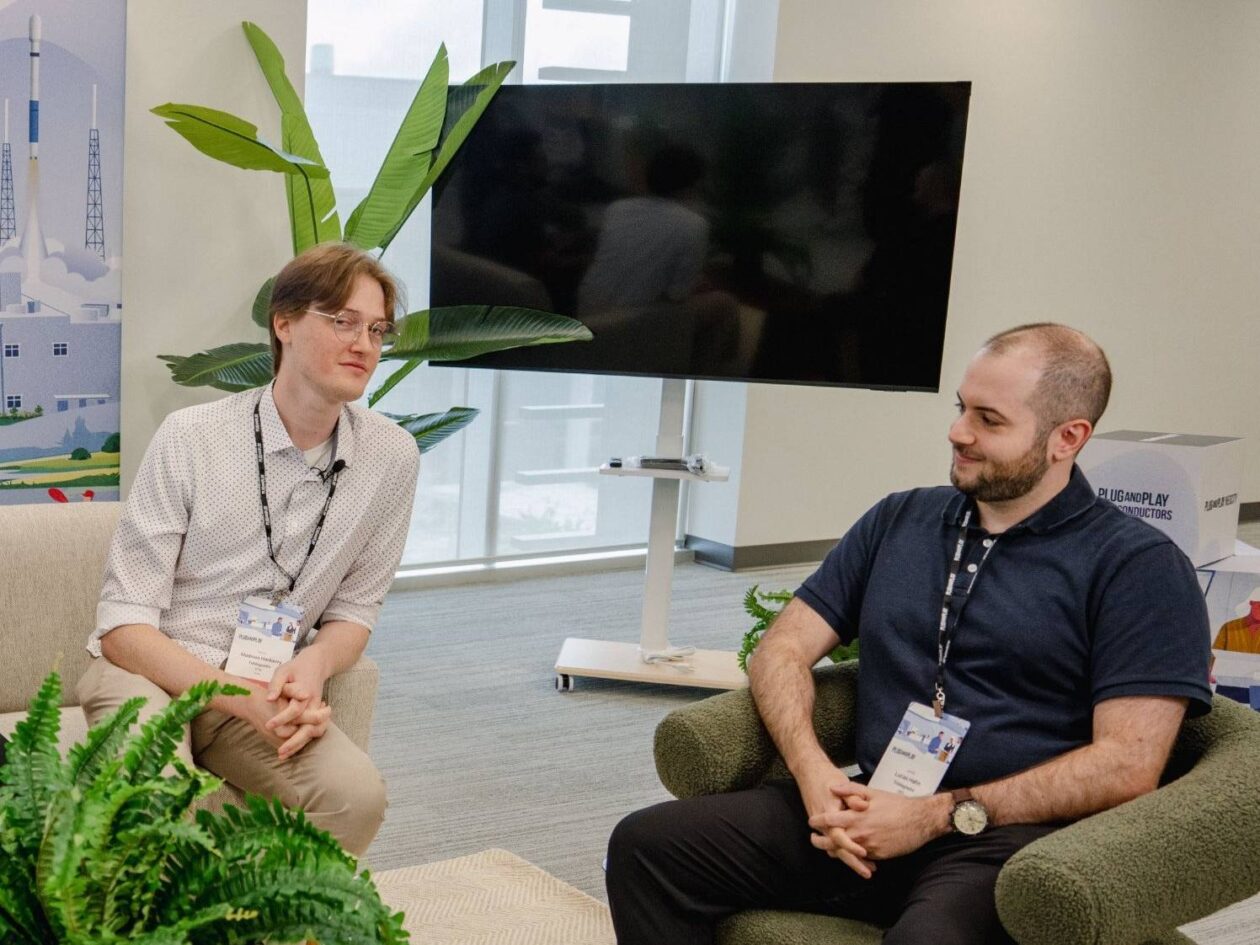
Seattle startup TriMagnetix has secured $1 million to develop semiconductor chips that consume 800 times less energy and are radiation-resistant. The two-person company, leveraging nanomagnetic technology, is targeting space applications and data centers. With new funding and key partnerships, TriMagnetix aims for commercial sales within a year.
Secure Internal API Access for AI Agents with MCP
AI agents accessing internal APIs directly pose significant risks, including identity loss, unrestricted queries, and security bypasses. The Model Context Protocol (MCP) offers a solution by defining explicit tools. A secure architecture involves an MCP server wrapping the API with strict input validation, coupled with a gateway that handles authentication, rate limiting, and audit logging, ensuring safe and accountable access.
regional: ‘What is fusion?’ Helion Energy harnesses the power of
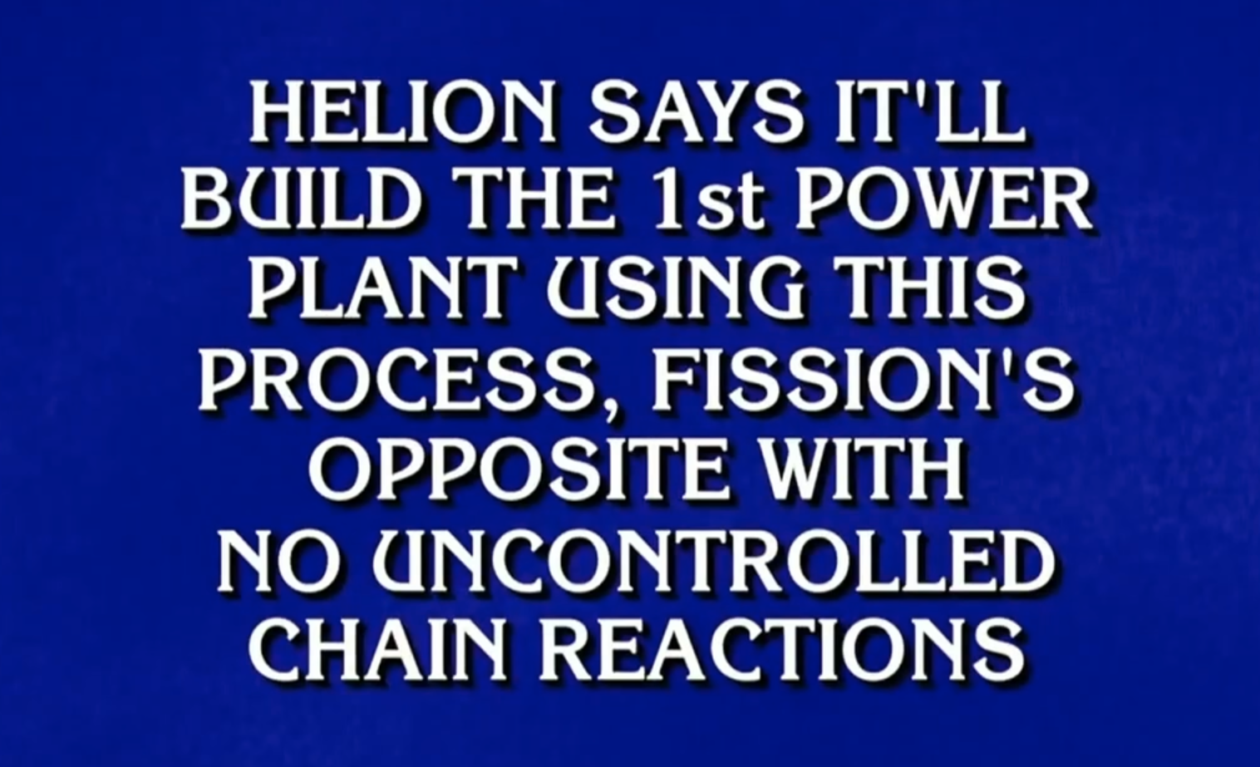
Helion Energy, the Everett-based fusion startup, gained mainstream attention this week after being featured as a clue on the popular game show "Jeopardy!". The $800 clue, part of a "Y Combinator" category, highlighted Helion's mission to build the first fusion power plant, bringing the concept of clean energy to a wider audience. CEO David Kirtley celebrated the "surreal" moment as a sign that reliable clean power is becoming more accessible.