
Akiyama's Space Mission: A Pioneer's Honest Look
Verdict Toyohiro Akiyama's 1990 journey aboard Soyuz TM-11 was a groundbreaking, if imperfect, expedition that redefined access to space. As the first Japanese citizen, first commercially sponsored cosmonaut, and the
Verdict
Toyohiro Akiyama's 1990 journey aboard Soyuz TM-11 was a groundbreaking, if imperfect, expedition that redefined access to space. As the first Japanese citizen, first commercially sponsored cosmonaut, and the world's first journalist to report from orbit, his mission offered an unprecedented, unfiltered "user experience" of spaceflight. While the commercial returns for his sponsor, TBS, were ultimately mixed, Akiyama's honest portrayal, including initial struggles, provides invaluable insights into the human element of space exploration, making it a significant, albeit nuanced, success in space history and public engagement.
Mission Overview & "Specs"
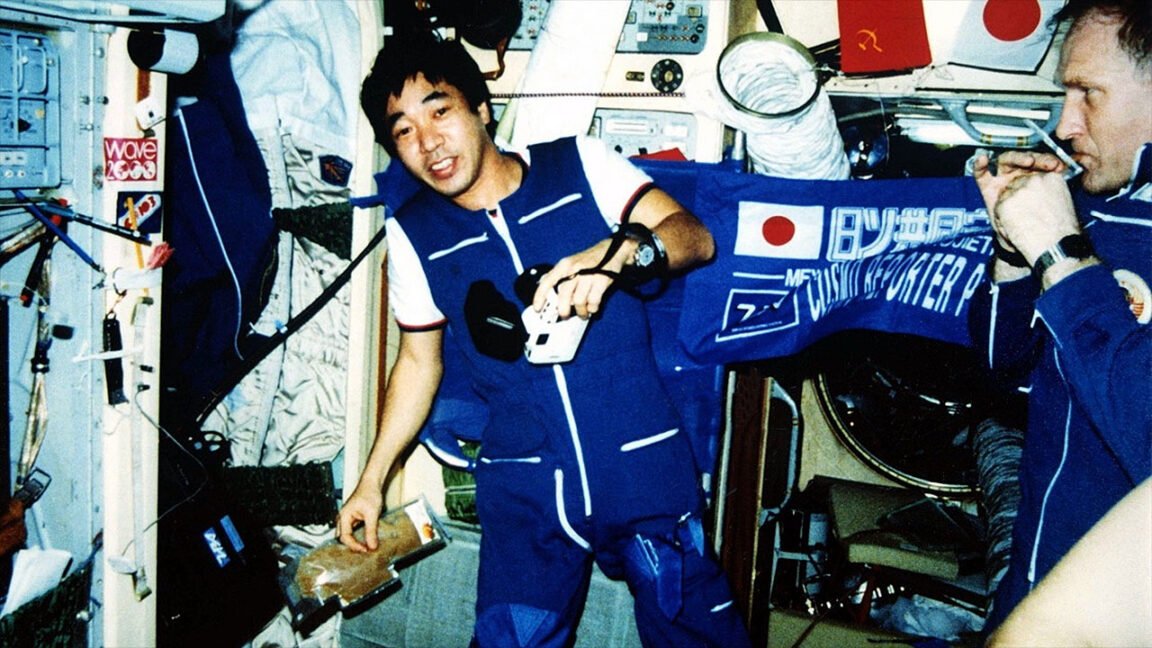
Toyohiro Akiyama, a correspondent for the Tokyo Broadcasting System (TBS), embarked on his historic mission on December 2, 1990. Selected from 162 fellow employees as part of TBS's 40th-anniversary celebration, Akiyama underwent rigorous training at the Gagarin Cosmonaut Training Center in Star City, outside Moscow. He launched with Soviet cosmonauts Viktor Afanasyev and Musa Manarov on a Soyuz U2 rocket, notably adorned with the Japanese flag and advertisements from companies like Sony, signaling a new era of commercial involvement in space.
After a nine-minute ascent and a two-day rendezvous, the crew arrived at the Mir space station. Akiyama's segment of the mission lasted just under eight days, specifically seven days, 21 hours, and 54 minutes. During this time, he was tasked with daily broadcasts for TBS, consisting of a 10-minute video and two 20-minute audio spots, collectively titled "To the Universe." The financial investment from TBS for this pioneering venture was substantial, reportedly ranging between $12 million and $37 million (US).
Upon his return to Earth on December 10, 1990, landing on the steppe of Kazakhstan, Akiyama had etched his name in history. He was the 239th person to orbit Earth and the 246th to cross the boundary into space, according to the Association of Space Explorers. His post-space career saw him transition from deputy director of TBS's news division to an organic mushroom and rice farmer, and later a professor at Kyoto University of Art and Design, reflecting a multifaceted life beyond his stellar achievement.
"User Experience" and Performance
One of the most compelling aspects of Akiyama's mission was his raw and surprisingly candid "user experience" of spaceflight. Unlike the often-heroic narratives presented by career astronauts, Akiyama's initial reports were marked by significant personal discomfort. He suffered from severe space adaptation syndrome, commonly known as "space sickness," and compounded this with nicotine withdrawal, being a chain cigarette smoker prior to launch.
These challenges led to early broadcasts that were far from the enthusiastic, awe-filled descriptions one might expect. He famously described the water surrounding Japan as "look[ing] very muddy" and made a memorable, if somewhat melancholic, observation about the tree frogs brought from Japan: only the "fat" ones enjoyed weightlessness, while the "thin Japanese frogs act as if they would rather be back in Yokohama." This stark honesty earned him the moniker "the space antihero" from The New York Times.
As the week progressed, Akiyama's disposition improved. He offered an apology for his earlier negative attitude and began to share more positive observations, including footage of Mount Fuji, which reportedly delighted his viewers. He also commented on the varied appearance of Japan from orbit, noting that most of it "looks like it has moss all over," with the exception of the northern island of Hokkaido, which "looks like delicious kelp."
Despite these later, more positive reports, the public's initial fascination with Akiyama's mission dwindled as the week wore on. TBS had hoped their substantial investment would elevate their international profile and boost viewership, but beyond a brief initial surge, these long-term commercial objectives largely failed to materialize.
Commercial Model and "Design" Evaluation
Akiyama's mission represented a pioneering "design" in space access: a fully commercially sponsored flight for a civilian, specifically a journalist. This model was a significant departure from government-funded or military-driven space endeavors that dominated the era. The decision by TBS to invest millions in sending their correspondent to Mir highlighted a burgeoning interest in making space accessible, not just for scientific research or national prestige, but for public interest and media coverage.
Pros of this commercial model included:
- Democratization of Space: It showed that spaceflight could be an experience for non-government personnel, paving the way for future space tourism and private missions.
- Novelty and Public Engagement: The idea of a journalist reporting live from space was a powerful draw, offering a fresh perspective on an environment typically reserved for highly specialized professionals.
- Brand Visibility: The presence of Japanese corporate logos on the rocket itself, and the implicit association of TBS with such a historic feat, demonstrated the potential for space as a marketing platform.
However, there were also notable cons:
- High Cost, Uncertain Return: The substantial investment by TBS did not translate into sustained viewership or a significantly enhanced international profile, suggesting that commercial space ventures require careful consideration of ROI.
- Prioritization Challenges: The mission's primary goal was reporting and publicity, which could diverge from the scientific or operational goals of a traditional spaceflight, as evidenced by Akiyama's personal challenges affecting his initial reports.
- Limited Duration: A one-week mission, while impactful for immediate news, offered limited scope for deep journalistic exploration or sustained engagement.
Comparison to Career Astronauts
Akiyama's mission stands in contrast to the career astronaut path exemplified by individuals like Mamoru Mohri. Mohri was expected to be the first Japanese career astronaut to reach space and orbit Earth, a flight that was delayed by the 1986 Challenger tragedy and ultimately occurred two years after Akiyama's mission.
While both men were Japanese citizens going to space, their motivations and roles differed significantly:
- Toyohiro Akiyama (Journalist/Commercial Citizen): His primary objective was to report from space for public consumption, funded by a private corporation. His experience was as a civilian observer, bringing an everyman perspective to the extraordinary environment.
- Mamoru Mohri (Career Astronaut/Scientist): His role was that of a trained scientist and astronaut, focused on conducting scientific experiments and representing national space agency objectives. His flights were part of a long-term career in space exploration, emphasizing scientific data collection and technical operations.
Akiyama's journey underscored the human experience of spaceflight – its immediate challenges and wonders – while Mohri's represented the more traditional, rigorous, and scientific approach. Both contribute to the tapestry of space exploration, but Akiyama's commercial, journalistic lens offered a unique and immediate connection for the public.
Recommendation
Toyohiro Akiyama's mission, despite its financial complexities for TBS and his initial personal struggles, is unequivocally a valuable and groundbreaking chapter in space exploration history. For anyone interested in the human side of spaceflight, the evolution of space access, or the role of media in scientific endeavors, Akiyama's story offers a compelling and honest narrative.
His flight demonstrated that space wasn't solely the domain of highly trained military personnel or government scientists. It opened the door for commercial participation and provided a genuine, often raw, perspective that resonated with the public in a way purely scientific reports might not. While the direct commercial returns for his sponsor were fleeting, the enduring legacy of Akiyama's pioneering spirit and his unfiltered reports from Mir far outweigh any short-term viewership dips. His mission is a testament to the value of diverse voices and experiences in the final frontier, enriching our collective understanding and inspiring new generations to look towards the stars, not just as scientists, but as storytellers.
FAQ
Q: Was Toyohiro Akiyama's mission a success?
A: While the commercial goals for TBS (sustained viewership, international profile boost) were only partially met, the mission was a profound success in its pioneering aspects: Akiyama was the first Japanese citizen, first commercially sponsored cosmonaut, and first journalist in space. His honest reports provided a unique and invaluable human perspective on spaceflight.
Q: What was the primary significance of Akiyama's spaceflight?
A: The primary significance lies in its groundbreaking nature. It demonstrated the feasibility of commercially sponsored civilian spaceflight and introduced the concept of a journalist reporting directly from orbit, bringing an unprecedented, accessible perspective to the public and paving the way for future commercial space endeavors.
Q: How did his experience compare to career astronauts?
A: Akiyama's experience, as a journalist and civilian, differed markedly from career astronauts. He openly shared his struggles with space sickness and nicotine withdrawal, offering a more vulnerable and human account compared to the typically composed and scientifically focused reports from career astronauts. His mission focused on public engagement and reporting, whereas career astronauts like Mamoru Mohri typically concentrate on scientific research and long-duration technical operations.
Related articles
Fitbit Edge: Hold Your Horses on Day One
The Google Fitbit Edge has arrived with an MSRP of $179.99, sparking considerable interest in the wearables market. Positioned as a device that balances the utility of a basic fitness band with some advanced features,

Premier League Soccer Streaming: Global Access, Regional Maze
Quick Verdict Streaming Premier League soccer from anywhere is a viable option for international fans, but it's a fractured landscape. In the US, Peacock and NBC Sports Network are your go-to. UK viewers rely on Sky

Plug-in Solar Legalization: A Bright Step for Home Energy
The legalization of plug-in solar in 10 US states signals a major shift towards accessible home energy. This review covers the systems, legal status, savings potential, and crucial considerations for consumers.
Android 17 QPR2 Beta 7.1: The Performance Relief You've Been Waiting
Android 17 QPR2 Beta 7.1: Finally Fixing the QPR1 Performance Woes Verdict: Android 17 QPR2 Beta 7.1 is a crucial and highly anticipated software update for Google Pixel users, specifically targeting and resolving the

MapQuest's ALPR Feature: Navigating Surveillance with Intelligence
Quick Verdict MapQuest's latest "Surveillance" feature is a compelling and timely addition, offering users the ability to identify automated license plate reader (ALPR) cameras in their vicinity. While its data sourcing

"thegentlemanpervert": A Catastrophic Failure in Digital Ethics and
"thegentlemanpervert" review: An AI CSAM production and distribution operation, led by a NJ prosecutor, proved to be an absolute and catastrophic failure, resulting in felony charges and a stark warning about digital culpability.