
AI-Drafted Bills Swamp House Law Office, Threatening US Legislation
Congressional staffers and outside groups are increasingly relying on AI tools like Claude and ChatGPT to draft legislation, overwhelming the House Office of Legislative Counsel (OLC). This critical office, responsible
Congressional staffers and outside groups are increasingly relying on AI tools like Claude and ChatGPT to draft legislation, overwhelming the House Office of Legislative Counsel (OLC). This critical office, responsible for ensuring the legal integrity of US laws, is now spending more time correcting AI-generated bills than it would take to write them from scratch, according to a Politico report based on interviews with current and former officials. This influx of machine-made legislation threatens to undermine the efficiency and accuracy of the legislative process.
The Unseen Strain on Capitol Hill
The OLC functions as the indispensable quality-control layer, transforming legislative concepts into legally sound statutes. Marci Harris of the POPVOX Foundation emphasized its critical role, stating, "When we talk about Congress’s ability to legislate, we are talking about this office." The sheer volume of work is already immense; in the 118th Congress, the office prepared 30,494 bills, nearly three times the 10,564 that were actually introduced. Additionally, amendments saw a 46% surge from the 114th Congress, totaling 21,484.
Despite a 59% increase in attorneys since the 116th Congress, the OLC’s average experience level has declined by 22%. A significant 58% of its 78 attorneys now possess less than a decade of service. This combination of less experienced staff and the rising tide of AI-drafted bills creates an unprecedented strain. One anonymous House staffer ominously described the situation as "absolutely terrifying," noting that "no one is thinking about it yet."
The Flaws in Machine-Made Legislation
AI's shortcomings in legislative drafting are proving both subtle and profoundly impactful. Wade Ballou, who led the OLC from 2016 to 2024, highlighted AI's difficulty in discerning between crucial financial mechanisms such as "a tax credit, tax deduction, tax exclusion or a grant." Such distinctions are fundamental for precise policy implementation.
Definitions pose similar challenges; an AI might inadvertently exclude Washington D.C. or tribal nations from federal programs by defining "state" too narrowly. Critically, AI-generated bills are prone to incorrect statutory citations. Ari Hershowitz, a lawyer and technologist, warned that these errors are "a guaranteed way of introducing thousands of bugs into our legal system." This echoes past incidents, such as the AI-generated fake software vulnerabilities that previously flooded official pipelines. Daniel Schuman of the American Governance Institute succinctly stated, "AI is good for a lot of stuff... But it’s not capable of drafting legislation that you would want to enact into law."
A Deluge of Data, Conflicting Numbers
The precise scale of the increase in legislative requests, potentially exacerbated by AI, is presented with some conflicting figures. Politico initially cited a 72% surge in requests during the first 60 days of the current Congress compared to the previous one, based on earlier testimony from Legislative Counsel Warren Burke. However, Burke’s more recent testimony in March indicated a more moderate 5.7% increase over the first 13 months of this Congress.
Irrespective of the exact percentage, Burke was unequivocal in March: "In the near term, we are bracing for AI to expand our workload." He further noted that any text submitted by outside entities, whether human or computer, typically demands significantly more time for the OLC to review and revise. Burke chose not to comment for Politico's article.
Congress's Double Standard on AI Tools
Paradoxically, while congressional offices and external groups freely leverage AI for drafting, the OLC's own AI adoption is more restricted. With House authorization, the OLC is evaluating Microsoft Copilot primarily for internal efficiencies like legal research. They also deploy their proprietary Comparative Print Suite, an AI tool utilizing natural language processing to precisely show how a bill would alter the US Code, notably without "hallucinations."
Charlotte Lee of Granicus, a designer of the Comparative Print Suite, pointed out this striking disparity: "Members and interest groups get to write things with AI, but then leg counsel themselves can’t use [commercially available] AI." She concluded that this represents a "complete incongruency," highlighting an uneven approach to AI deployment within Capitol Hill.
The Human Element and Future Concerns
To date, no entirely AI-crafted bill has passed a vote in either congressional chamber. However, the private nature of AI use among staffers makes comprehensive tracking challenging. One staffer revealed that using AI often feels taboo, leading users to avoid disclosure. This mirrors inconsistencies in AI labeling rules elsewhere, like the EU AI Act, where AI-written articles might not require a label, but a proofread email might.
Representative Anna Paulina Luna drew public scrutiny in June after using Claude for an amendment summary, though she clarified the AI did not write the amendment itself. She candidly remarked, "Not a shocker. Most staff use it," while emphasizing the need for staff to double-check AI outputs. Representatives Joe Morelle and Norma Torres of the Committee on House Administration underscored the human responsibility in lawmaking. Morelle stated, "AI cannot replace the skilled and dedicated professionals" in the OLC, and Torres affirmed that legislative responsibility "cannot be outsourced to a chatbot."
The broader context reveals Congress actively engaging with AI, from significant spending on OpenAI to discussions about "kill switch" legislation for AI systems. While Wade Ballou believes AI can assist in information processing, he maintains it cannot replace the "art of drafting." Ari Hershowitz offered a grim forecast: "You had a problem that was already at 10... Now you multiply it by 100," suggesting the legislative bottleneck is poised to worsen dramatically.
FAQ
Q: What is the main problem AI-drafted bills are causing for the House Office of Legislative Counsel (OLC)? A: The OLC is now spending more time correcting errors and nuances in AI-generated legislation than it would take for their attorneys to draft the bills from scratch. This is creating a significant strain on the office's resources and staff, threatening the efficiency and accuracy of the US law-making process.
Q: What kinds of errors are commonly found in AI-drafted legislation? A: AI often struggles with legal nuances, such as distinguishing between different types of financial allocations (e.g., tax credit versus grant), precise definitions that could inadvertently exclude specific groups (e.g., Washington D.C. or tribal nations from federal programs), and accurate statutory citations, which experts warn can introduce "thousands of bugs" into the legal system.
Q: Has any entirely AI-drafted bill been passed by Congress? A: According to the Politico report, no bill that has been voted on by either chamber has been found to be entirely AI-crafted yet. However, disclosure of AI use in drafting is often inconsistent, and the full extent of its application by congressional staffers and outside groups remains largely undisclosed due to a perceived taboo surrounding the technology.
Related articles

Apple Unveils iPhone Duo: Pricey Foldable Sees Soaring Demand
Apple has officially entered the foldable smartphone arena with the long-anticipated launch of the iPhone Duo. Priced starting at a hefty $1,999, the device features a 5.4-inch outer display and a larger 7.6-inch inner

in-depth: Chicago-Area Cops Helped HSI Spy on Minnesota Anti-ICE
Chicago-area law enforcement, including local police and HSI agents, conducted undercover surveillance on Minnesota anti-ICE activists at an April 2, 2022, talk in Chicago. This operation was part of a federal conspiracy probe into 15 Minnesota activists facing felony charges related to immigration enforcement resistance. Civil liberties advocates have condemned the surveillance as a troubling intrusion into protected political activity.

Mark Wahlberg on using AI in film ‘the right way’ and being open to
Actor Mark Wahlberg believes AI has a place in filmmaking if used responsibly for enhancement, not script generation or actor replacement. At TechCrunch Disrupt, he expressed openness to an AI likeness carrying on his legacy, managed by his family, and emphasized storytelling.

Tesla Unveils Thruster-Equipped Roadster, 2028 Production Targeted
Tesla has unveiled its second-generation Roadster, featuring cold-gas thrusters co-developed with SpaceX, enabling it to jump and flip. The electric sports car demonstrated 0-60mph in an astonishing 0.81 seconds, with production targeted for 2028. This highly anticipated reveal also serves as a key recruitment tool for Tesla's ambitious AI and robotics initiatives.
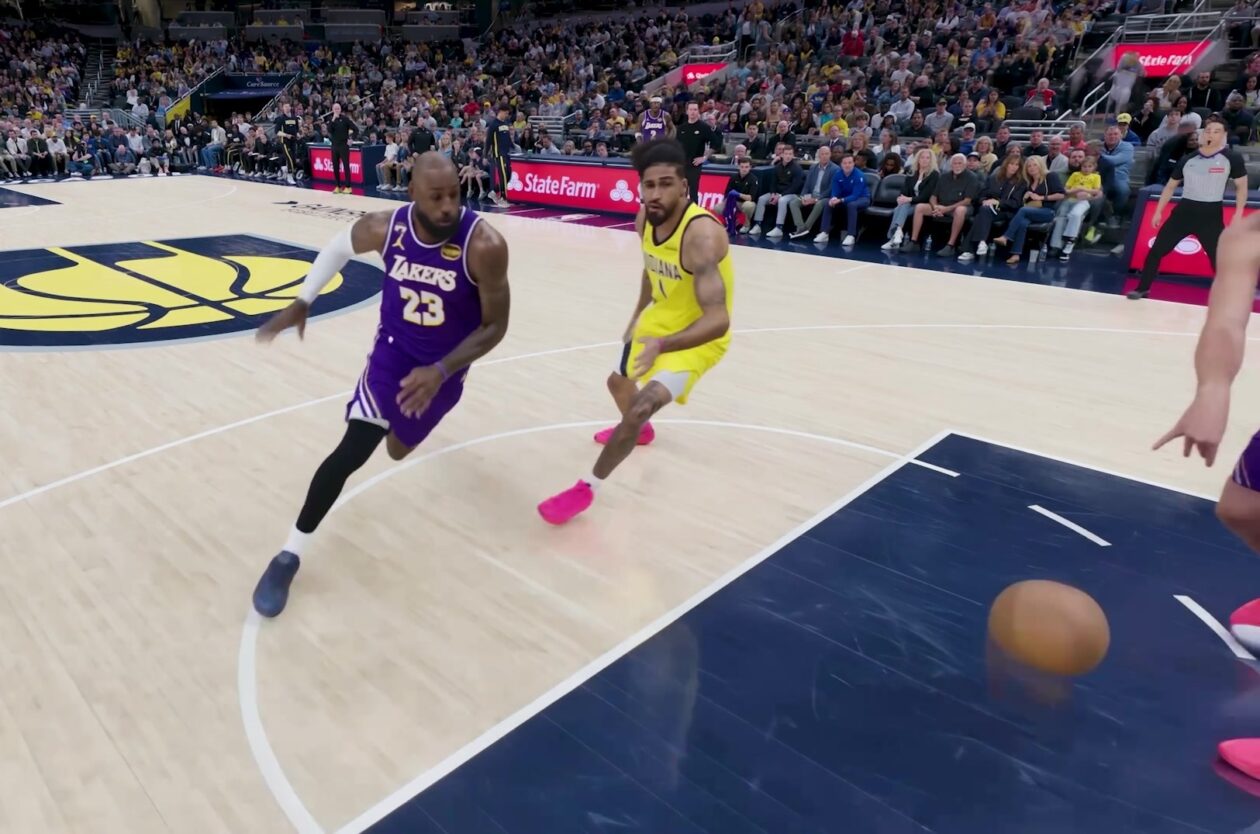
Amazon Prime Video Launches AI-Powered Prime 360 for NBA Coverage
Amazon Prime Video is elevating its NBA coverage with the introduction of Prime 360, an AI-powered replay system offering immersive, 'fly through' views of the action. Kicking off its second season, Prime Video also adds Yahoo fantasy integration and gains exclusive Eastern Conference Finals rights, expanding its tech-driven sports broadcast. The new features aim to deliver a unique and interactive viewing experience for basketball fans.

regional: A two-person Seattle startup lands $1M to reinvent
Seattle startup TriMagnetix has secured $1 million to develop semiconductor chips that consume 800 times less energy and are radiation-resistant. The two-person company, leveraging nanomagnetic technology, is targeting space applications and data centers. With new funding and key partnerships, TriMagnetix aims for commercial sales within a year.