
A $100 Smartphone in 2026: An Honest Review of Budget Options
In 2026, a $100 smartphone delivers essentials but requires compromises. New unlocked phones are basic, while prepaid deals offer better specs with carrier locks, and the used market provides older flagships with inherent risks.
A $100 Smartphone in 2026: An Honest Review of Budget Options
Quick Verdict: In 2026, a $100 smartphone delivers the essentials – calls, texts, and core apps – but demands significant compromises. While new unlocked options are remarkably basic, prepaid carrier deals offer surprisingly better hardware for the money, and the used market can provide access to older flagships, albeit with inherent risks like battery degradation or uncertain software longevity.
Not everyone needs a top-tier device with all the latest bells and whistles. With flagship phone prices continually climbing, there's a growing demographic seeking simplicity and affordability. For those prioritizing basic communication and essential app functionality, spending around $100 on a smartphone in 2026 is certainly feasible. However, it's crucial to set realistic expectations; what you save in cash, you'll often sacrifice in performance, camera quality, and premium features.
At this price point, you can expect a device with a full-color touchscreen, access to modern Android applications, Wi-Fi, Bluetooth, GPS, at least one rear camera, and generally decent battery life. Beyond these fundamentals, the quality and feature set vary drastically depending on whether you opt for a new, unlocked phone, a carrier-locked prepaid deal, or an older model from the used market.
The Truly Unlocked: Bare Bones Freedom
If your priority is an unlocked phone that works with any major US carrier right out of the box, prepare for a minimalistic experience. These devices focus solely on core functionality, leaving luxury features behind.
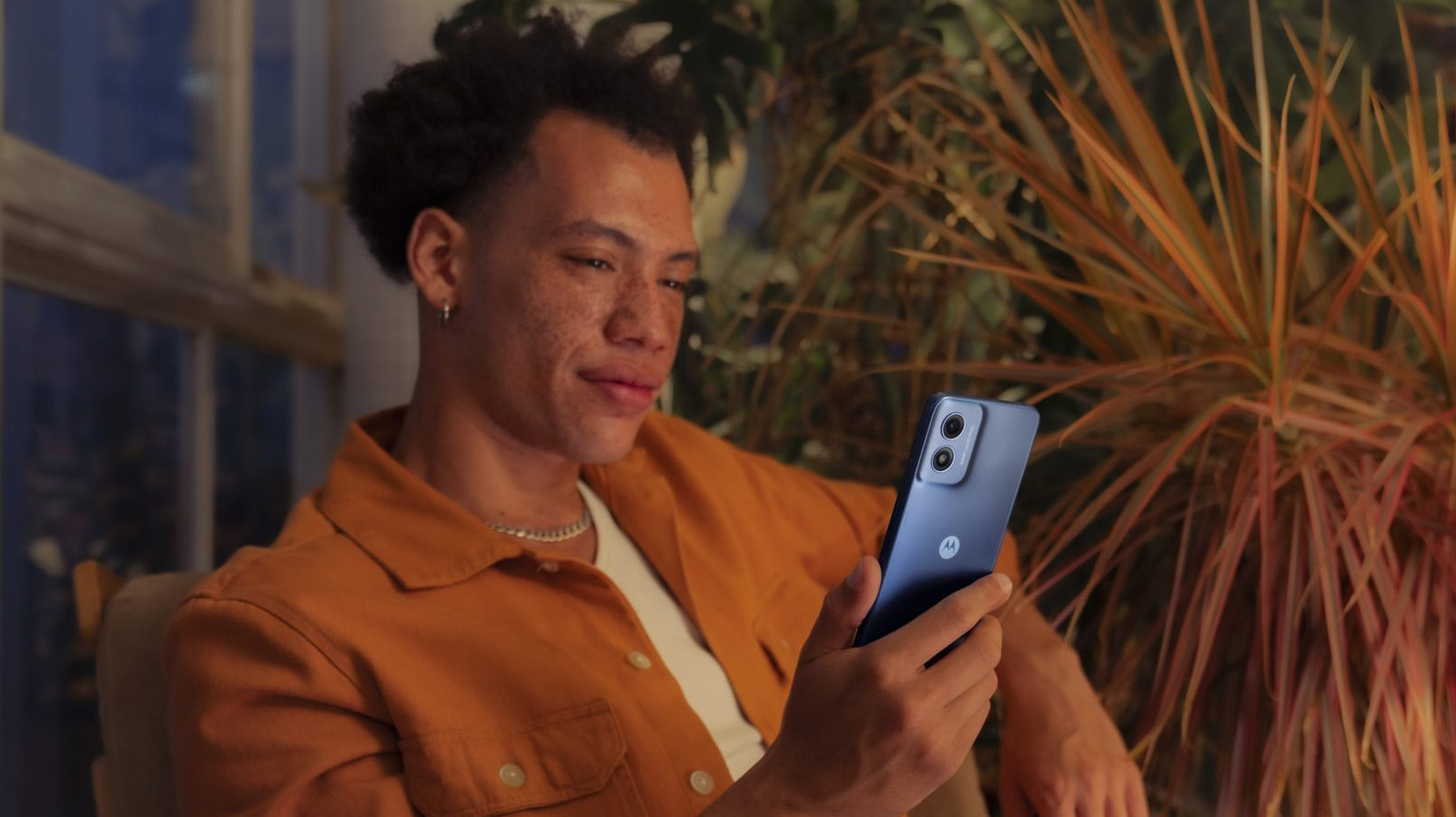
The Motorola Moto G Play (2024) frequently leads this category, often discounted to around $100 from its $150 list price. It sports a 6.5-inch HD+ display with a 90Hz refresh rate, a 50-megapixel main camera, 64GB of storage (expandable via microSD), and 4GB of RAM. Powering it is a 5,000mAh battery, which should comfortably last a full day, complemented by a near-stock Android interface. The main drawback here is its limitation to 4G LTE speeds, meaning you won't be experiencing the faster data transfer of 5G.
Other options exist, such as the TCL 30 Z, which is advertised as unlocked and carrier-compatible. However, its specifications are notably weaker: a smaller 6.1-inch HD display, a 3,000mAh battery, a meager 32GB of storage, 3GB of RAM, and a basic 8-megapixel rear camera, also restricted to 4G LTE. While an Amazon Renewed model might be found for around $61, it's considered a significantly inferior device. Lesser-known brands like BLU also offer new unlocked phones below $100, but these typically come with rock-bottom specs and even more limited carrier support. Ultimately, with truly unlocked models at this price, you're paying for flexibility, not a particularly enjoyable user experience.
Prepaid Deals: The Best New Phone Value, With Strings Attached
For those willing to commit to a specific prepaid carrier, the value proposition dramatically improves. These carrier-locked devices often provide a much more robust feature set for under $100.
Samsung's prepaid offerings stand out. The Galaxy A15 5G, for instance, can drop to $40-$50 through carriers like Straight Talk, Boost Mobile, or Cricket. At this price point, you get a significantly better experience, including a vibrant 6.5-inch FHD+ AMOLED screen, 5G connectivity, a capable 50-megapixel main camera, and a substantial 5,000mAh battery.
Walmart frequently offers an AT&T-locked Galaxy A16 5G for a similar price. This model boasts a larger 6.7-inch 90Hz display, faster 25W charging, and up to 128GB of internal storage. Stepping up slightly, the Galaxy A26 5G, sometimes available for around $100 locked to Straight Talk, offers even more impressive specs: 6GB of RAM, a smooth 120Hz display, IP67 water resistance, and a commitment to longer software support. These prepaid options feel far more like a “normal” smartphone experience than their new unlocked counterparts, making the carrier lock a worthwhile trade-off for many.
The Used Market: Flagship Features with Inherent Risks
Opening your search to the used market dramatically expands your options, potentially bringing older midrange and even flagship models within the $100 budget. This pathway allows access to hardware that was once premium, offering a superior experience in many areas.
Apple devices, generally out of reach for this budget when new, become accessible here. The 2022 iPhone SE, featuring a 4.7-inch Retina HD display, an A15 Bionic chip, 5G, and a 12-megapixel main camera, can occasionally be found for around $100. The iPhone 11 sometimes dips below this price, while the iPhone 12 usually requires a slightly higher investment. Crucially, all three of these older iPhone models are slated to receive the upcoming iOS 27 update, ensuring continued software support.
On the Android side, the used market is even richer. Devices like the Galaxy A52 5G can be found for under $100, and some listings for the Galaxy S10, S10+, and Galaxy S20 FE 5G may come close. These older flagships often feature much sharper screens, more capable cameras, and a more premium design compared to any new phone in this price bracket.
There are also “Goldilocks” options – mid-range phones that aren't quite as old as flagships, striking a balance between age and features. The Galaxy A53 5G, Moto G Power 5G (2025), and Moto G Stylus 5G (2023) can appear in this range. The Pixel 6a, known for its strong camera performance, is also a possibility, with listings often in the low to mid-$100s.
However, buying used comes with significant compromises. Battery degradation is a common issue, and the cosmetic condition can vary widely. While software support is commendable for older iPhones, it's more of a gamble for older Android devices. Despite these risks, the used market offers the best opportunity for a feature-rich experience if you're prepared to accept potential imperfections and manage battery expectations (or plan for a replacement).
Comparison Overview
To better understand the landscape, here's a quick comparison of what each category typically offers for around $100 in 2026:
| Feature | Truly Unlocked (e.g., Moto G Play 2024) | Prepaid Deals (e.g., Galaxy A15/A16 5G) | Used Market (e.g., iPhone 11/Galaxy S10) |
|---|---|---|---|
| Price Range | ~$100 (often discounted) | $40-$100 | ~$100 (highly variable) |
| Display | HD+ LCD (90Hz) | FHD+ AMOLED (90Hz/120Hz) | Retina HD/FHD+ (often OLED, variable refresh) |
| Performance | Basic, 4G LTE | Entry-level to Mid-range, 5G | Mid-range to Flagship (older gen) |
| Camera | 50MP main (basic quality) | 50MP main (better quality) | 12MP/Multiple (generally superior quality) |
| Storage | 64GB (expandable) | 64GB/128GB (expandable) | 64GB/128GB (variable) |
| Battery | 5,000mAh (good for day) | 5,000mAh (good for day) | Variable (prone to degradation, may require replacement) |
| Software | Mostly stock Android, limited updates | Android, potentially longer support | iOS/Android, excellent for iPhones (iOS 27 mentioned) |
| Restrictions | None | Carrier locked | None, but condition/battery risks |
| Value for Money | Low | High for new hardware | High for features, but comes with risks |
The Final Verdict: Choosing Your $100 Companion
Deciding which $100 smartphone path is right for you depends entirely on your priorities and tolerance for compromise:
-
For ultimate flexibility and no strings attached, for only the most basic communication needs: Opt for a new, truly unlocked phone. Just be prepared for a very rudimentary user experience and 4G LTE speeds.
-
For the best hardware value in a new device, and if you're comfortable with a carrier commitment: Prepaid deals offer a significantly better experience, including faster 5G, superior displays, and better cameras, making them feel much more like a modern smartphone.
-
For premium features, design, and camera quality, if you're willing to take on some risk and potentially replace a battery: The used market provides access to devices that were once top-tier. This is ideal for those who are tech-savvy enough to assess condition and potentially perform minor upkeep.
In 2026, $100 gets you a functional smartphone, but it’s a journey of trade-offs. Choose wisely based on what truly matters to you.
FAQ
Q: What's the biggest trade-off for a $100 smartphone in 2026? A: The primary trade-off is often speed and overall performance, followed closely by camera quality and premium build materials. While some options offer decent displays or storage, a truly smooth and feature-rich experience is generally out of reach at this price point.
Q: Are prepaid phone deals worth the carrier lock? A: For many, yes. Prepaid deals offer significantly better hardware for the money, often including features like 5G, AMOLED displays, and more capable cameras, which are virtually nonexistent in new unlocked phones at this price. If you're comfortable staying with a specific carrier for a period, these deals represent the best new phone value.
Q: What are the main risks of buying a used smartphone for under $100? A: The biggest risks include potential battery degradation, unknown cosmetic condition, and the uncertainty of future software support, especially for older Android flagships. While iPhones often maintain longer software support, battery health is a common concern across all used devices at this price.
Related articles

Apple Unveils iPhone Duo: Pricey Foldable Sees Soaring Demand
Apple has officially entered the foldable smartphone arena with the long-anticipated launch of the iPhone Duo. Priced starting at a hefty $1,999, the device features a 5.4-inch outer display and a larger 7.6-inch inner
Android 17 QPR2 Beta 7.1: The Performance Relief You've Been Waiting
Android 17 QPR2 Beta 7.1: Finally Fixing the QPR1 Performance Woes Verdict: Android 17 QPR2 Beta 7.1 is a crucial and highly anticipated software update for Google Pixel users, specifically targeting and resolving the

DJI Solo Video Setups: Smart Choices for Lone Creators
This review delves into DJI's recommended solo video setups, highlighting the Osmo Pocket 3 Creator Combo as a top pick for its integrated camera, gimbal, and mic. It also covers stabilizers like the Osmo Mobile 8 and RS 4, and the DJI Mic Mini series for enhanced audio, providing honest pros, cons, and clear buying advice.

Ars Technica's Rocket Report: Your Essential Space Industry Briefing
Quick Verdict Ars Technica's Rocket Report, presented by veteran space reporter Stephen Clark, offers an invaluable and meticulously organized weekly (or similar frequency, implied by "Edition 9.15") digest of the most

Apple iPhone Duo: A Daring Debut with Notable Compromises
Apple's highly anticipated iPhone Duo, priced at $2,000, has gone on pre-order. While hailed as "Apple's most exciting device in a decade" for its innovative foldable design and immersive display, it comes with significant drawbacks like the absence of FaceID and a premium camera.

KDE Plasma 6.8: A Future-Focused 30th Anniversary Update
Quick Verdict KDE Plasma 6.8, arriving as the "30th Anniversary Edition," is a pivotal release that decisively pushes the desktop environment into the future. With a definitive farewell to native X11 sessions and a